In the new comedy-thrillerEmergency,a night of partying at the end of acollege schoolyear takes a turn when friends Sean (RJ Cyler) and Kunle (Donald Elise Watkins) find an unconscious girl (Maddie Nichols) in their college apartment. Worried the police will suspect them of wrongdoing, the pair, along with their roommate Carlos (Sebastian Chacon) try to get the girl to safety without drawing suspicion, while her sister (Sabrina Carpenter) frantically combs the campus to find her.
The film was directed byCarey Williamsfrom a script byKD Dávila.The two previously worked together on the short filmEmergency, on which the feature film is based. Dávila and Williams hadn’t worked together prior to the short film, but they got to know each other through a fellowship program at Film Independent, called Project Involve. “Full Independent is a nonprofit in Los Angeles that supports independent filmmakers, and project Involve is a fellowship that supports artists from diverse underrepresented communities,” says Dávila. Carey was on the directing track, and I was on the writing track. And as part of that program, you make a short film. We had gotten to know each other throughout the beginning of that program. He read some of my work, and I watched his films.”

The idea for theoriginal short filmwas inspired by a few true stories, though a bit exaggerated. “A very intoxicated woman once stumbled into my friend’s place, who is a Latino man from Los Angeles, when we were in grad school,” says Dávila. “He was trying to be nice and decided to take her home because she was clearly lost. She ended up passing out in his car, and it became a very tense, complicated situation. I don’t know if you’ve ever been around USC before, but the police like to pull people over. It just became a very tense situation. I remember him telling me that it was the longest drive of his life. We wanted to tell a story that was about the absurdity of having to calculate how you’re being perceived at all times when you’re a person of color.”
Shifts in Tone
That absurdity comes in waves of alternating humor, tension, and drama, and that shift in tone is grounded by the film’s two leads. “The thing that I really latched on to as my north star was their friendship and always trying to honor that and not trying to play it for laughs,” says Williams. “Having a very authored cinematic language to the film I thought was going to at least give us a thread and a through-line of the film, where it would feel cohesive, even when shifting through these tones.”
RJ Cyler approached those shifts by embracing the reality of the situations. “I approach a lot of my acting as a human rather than just an actor,” he says. “We get to live in our imagination when we’re in character, and sometimes we can get lost to where we won’t be reachable anymore or relatable. So, I kind of made sure to stay in a place of being in a real pair of shoes, even in situations where it wasn’t a part of my reality. I would think, ‘If I was in this situation, what would I do? So, you’re able to kind of pick those moments and be vulnerable and expose yourself in these ways that you normally wouldn’t. It’s a serious subject, but we’re still playing it with comedic timing because that is exactly how the human mind works. When we’re scared of things, or if we survive something traumatic, our first instinct is to laugh about it. It’s a way to get rid of the pressure that we built up. So, even just seeing that throughout the script, because I’m like, ‘I know, this punch is coming, but where is it coming from?’ And then it slowly comes.”
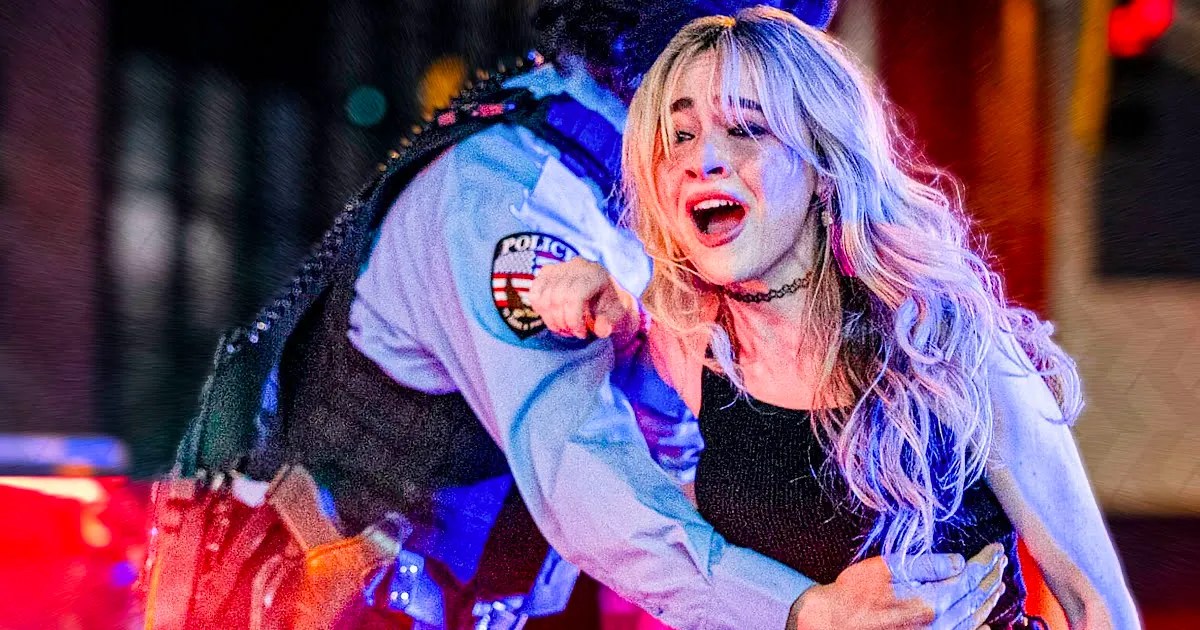
Williams saw that build-up come from the fact that the film was never a comedy for its protagonists. “Even though it is a dark comedy, it’s never a comedy from the point of view of the guys in the film,” he says. “They are very grounded in their reality and their emotions, and it’s never making fun of them. It’s making fun of the absurdity of the situation that they’re in. We made sure that it balanced thriller and comedy. It’s definitely it’s shot like a thriller, which I think really adds to that tension.”
Related:Master Review: Everyone’s Racist at Haunted College
One of the aspects that attracted Cyler to the role of Sean was how relatable and multidimensional the character was. “It provided an opportunity to present every nuance of a young black man, rather than just the scary one, or the strong one, or the cool one,” says Cyler. “I cried like a baby cry. I really wanted to present the full essence of what it is to be a young black dude. When I got to read for Shawn, he definitely seemed like a lot of different layers of me, like the bond that I have with my brothers. I’m the youngest of three, and the three boys in the film already have a similar dynamic.”
Cyler was also drawn to how the film addresses race relations and prejudice. “I feel K.D. did a really great job with the script,” he says. “She didn’t write it to make the black guy the suspect or the policeman the violator. She wrote the honesty of every single piece of the situation, and she didn’t make you feel attacked for having an opinion or a standpoint, or a perspective. She just allowed people to come to the movie with their sense of perspective, and then want to start the conversation of what the next perspective may be. She shows that Sean and Kunle look like, but their perspectives are polar opposites. A lot of films that address these issues make you pick a side. Can’t we just have a conversation? It was a healthy way of conveying the message without reaching too far on either side.”
While some of those messages were present in the short film, the filmmakers were given the opportunity to expand on them for the feature. “We actually didn’t conceive of the short film as a proof of concept or a feature film,” says Dávila. “We saw it as a standalone short film. In many ways, we were very much constrained by time and budget for the short, and we wanted to do something that was going to be unique. The cool thing about expanding it was that we really got to delve into the kind of the politics of the discussion a little bit more, as well as the friendship. That’s something that mattered to Carey a lot. We had a lot of discussions about how we’re going to expand it from the short into the future, and most of our discussions were, ‘What are their arcs as friends?’”
Finding the Right Chemistry
The chemistry between Shawn and Kunle, as well as Carlos, was the key to whether the film was successful, which Williams credits to the actors. “It was a dream to have this cast,” he says. “They, they nailed it. A lot of times when we were shooting, I just had to get out of the way and let them shine. I didn’t need to give them a lot of direction. We had RJ Cyler very early on because I worked with him on another film right before this (R#J). He’s fantastic, so I jumped at the chance to work with him again. Then ourcasting directorKim Coleman brought Donald and Sebastian to us, and their chemistry was just so great. RJ is a really very big personality, and Donald just matched up with him so beautifully. And then Kim brought Sebastian to us, and he matched up with them beautifully.”
Chacon’s audition wasn’t exactly what they were looking for, but with it, they knew they’d found their Carlos. “When I met him in person, I thought, ‘This guy’s too cool,” says Dávila. His audition was so like, and I say this with love, so weird. He was making these really cool, interesting choices. There’s such a sweetness and innocence to him.”
Sabrina Carpenter’s castingwas the result of a relationship she had with the production company. “I met with her, and we talked about music a lot,” says Williams. “We also talked extensively about the character, and she really understood Maddy in a way that made sense. We talked about her privilege and her like not really seeing beyond her own orbit. She was fantastic. The other supporting characters were fantastic too. We were really fortunate with this cast, and they all clicked so beautifully.”
According to Cyler, the support that the cast had for one another was what propped the film and its story up. “We approached everything like, ‘How do you need me to support this new choice in your character?” says Cyler. “’How do you need me to help find this way of doing that?’ I trusted everybody on this set to have my back and to help tell this crazy story. You think the story is going to go one way, and then it takes a turn. It’s not like a power slide. It’s just held the whole movie.”
