Queen Elizabeth IIrecently passed away aged 96 and was thesecond-longest reigning monarchin the history of the world. The high regard in which people across the globe held The Queen is reflected in the remarkable expressions of grief and public sympathy that followed the announcement by Buckingham Palace of her death. World leaders including Joe Biden, Justin Trudeau, and Emmanuel Macron have offeredheartfelt tributesto Queen Elizabeth’s dignity, assuredness, and friendliness.
As a cultural institution, Queen Elizabeth’s life and her role in the public eye have often drawn the attention of television and filmmakers. Here’s why Queen Elizabeth II has so frequently been the most compelling royal to grace our screens and will surely not be topped.

The Queen’s Girlish Glee and Royal Responsibility
The King’s Speech,Tom Hooper’s 2010 adaptation of David Seidler’s play, recounted the true story of how Elizabeth’s father, King George VI, overcame a serious stammer with the help of an unconventional clinician, Australian therapist Lionel Logue. The film was a massive success, bagging Academy Awards not only for Hooper but also for Seidler’s screenplay, Best Picture, and Colin Firth for Best Actor.
Related:The Crown Expected to Temporarily Shut Down Production Out of Respect for Queen Elizabeth II
But one of the film’s most sentimental touches was its depiction of Elizabeth in the mid-1930s. This was a time when her uncle was destined to ascend to kingship as Edward VIII, and Elizabeth was being prepared to live the uncomplicated, stress-free life of a minor royal. It was only when Edward abdicated in favor of his brother that Elizabeth found herself in the unwanted role of heir apparent.
The unexpected arrival of responsibility is an all-important aspect of Elizabeth’s narrative too.The King’s Speechdepicts Elizabeth at exactly the point when the possibility of becoming queen appears on the horizon. Played by Freya Wilson, the young princess comes across as a delicate mixture of girlish pursuits, such as brushing her toy horses and taking them back to the “stable” every night. But also, there’s her womanly responsibility, offering an unpracticed but well-meant curtsy after her father’s accession: “Your Majesty,” she addresses him in distinctly un-childlike tones.

There could be no more poignant reminder of how seriously the young Elizabeth went on to take her royal responsibilities.
The Handling of Royal Tragedy
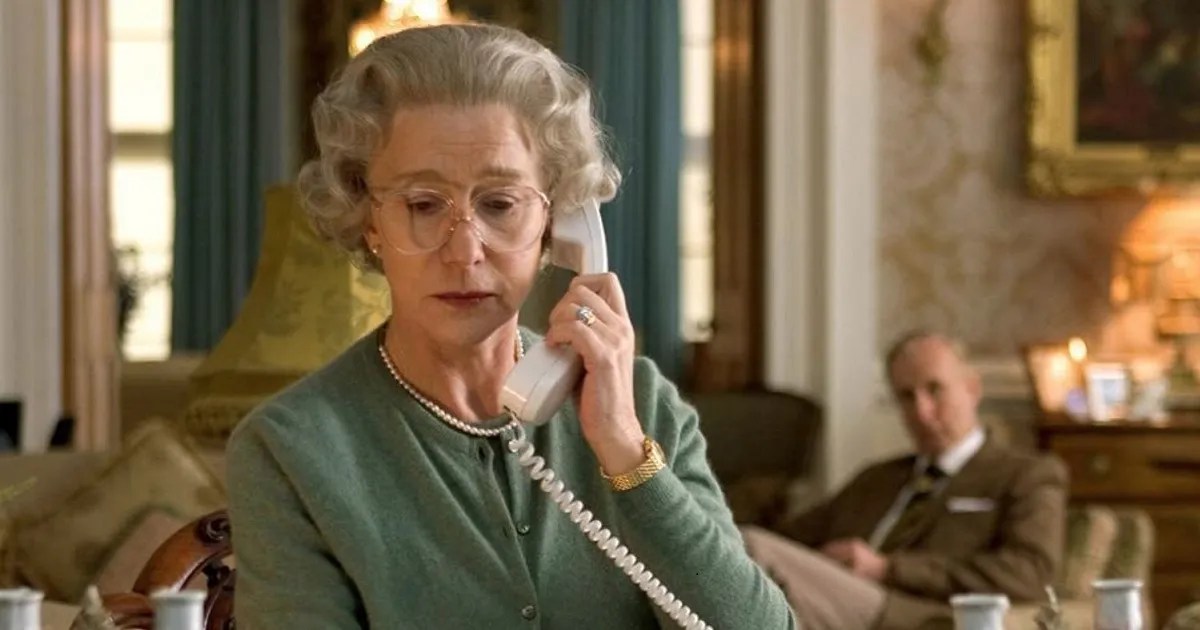
The Queen(2006)starred Dame Helen Mirrenin the titular role for which she won an Academy Award, with James Cromwell’s excellent performance as Elizabeth’s husband, Prince Philip.
The Queentells the story of how Elizabeth negotiated arguably her worst crisis as monarch – the handling of the immense outpouring of grief that followed the death of Princess Diana in a car crash in Paris in 1997. During a reign in which Elizabeth frequently had to carefully negotiate calls from republicans for the abolition of the British monarchy, the 1990s were a particularly difficult time, with successive royal scandals and Scottish and Welsh devolution seeming to loosen the bonds that held the United Kingdom together.
There was a problematic relationship between the Royal Family and Diana, who was widely seen as having been ill-treated and misused. It was brought into sharp focus when she died, and the public clamored for the trappings of a royal funeral for a woman who had been stripped of her title “Her Royal Highness” after her divorce from Prince Charles.
Related:The Best Films About British Royalty, Ranked
In the film, Mirren is compelling as Queen Elizabeth II. The sense of forthrightness generated by her initial unwillingness to address the British nation after Diana’s death contrasts with a brilliant performance by Welshactor Michael Sheenas Tony Blair, the smooth operator of 1990s British politics. He tries (and fails) to persuade as the British public is mourning too. The climax of the film, in which Queen Elizabeth II puts aside the rancor and discomfort caused by Charles' and Diana’s very public divorce, sees Elizabeth regain standing in the eyes of the British public and set the tone for the final quarter-century of her reign.
Queen Elizabeth II Redefined the Royal Role
Although it has been criticized for playing fast and loose with some of the historical events during Queen Elizabeth II’s reign,The Crownhas drawn praise across the board for its dramatic retelling of the trials and tribulations of the second Elizabethan age.
Played byEmmy Award-winning Claire Foyand then by Academy Award recipient Olivia Colman, Elizabeth comes across as conscientious and dutiful but also hurt by the serial infidelities of Prince Philip (played by Matt Smith). The manner in which she negotiates the burden of queenship through successive royal crises, the ups and downs of the British political scene, and her growing stature as the United Kingdom’s favorite grandmother underscore the transformative nature of her 70-year reign and the way in which it has helped to redefine the United Kingdom’s role on the world stage.
